Yes, a post-dated cheque is legally valid in India. It is a cheque bearing a future date and is commonly used when the parties agree that payment will be made on a later date. A post-dated cheque can represent a legally enforceable payment obligation, and its dishonour may attract consequences under Section 138 of the Negotiable Instruments Act, 1881, provided the statutory requirements are satisfied. The Supreme Court has recognised that post-dated cheques are commonly used as a mode of deferred payment.
What Is a Post-Dated Cheque?
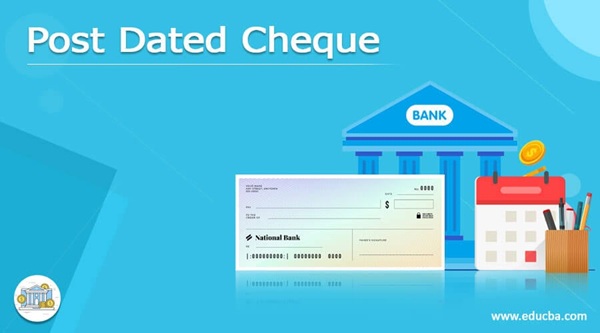
A post-dated cheque is a cheque that carries a date later than the date on which it is issued or handed over.
For example, if a person gives a cheque on September 21 but writes October 15 as the cheque date, it is a post-dated cheque. The cheque is intended to be presented for payment on or after the date written on it, subject to applicable banking rules and validity requirements.
Post-dated cheques are often used for instalments, loan repayments, business transactions, rent arrangements and other obligations where the parties agree to payment at a future date.
Is Giving a Post-Dated Cheque Legal?
Yes. A post-dated cheque is not inherently illegal or invalid merely because its date is in the future.
The Supreme Court has recognised the purpose of a post-dated cheque as providing accommodation to the drawer by allowing payment to be made at a later date. The Court has also observed that post-dated cheques are commonly used in transactions as a mode of deferred payment.
However, the legal consequences depend on the underlying transaction and the circumstances in which the cheque is issued.
When Can a Post-Dated Cheque Lead to Section 138 Action?
Section 138 of the Negotiable Instruments Act concerns dishonour of a cheque issued for the discharge, wholly or partly, of a legally enforceable debt or other liability, subject to the conditions prescribed by the law.
Therefore, the fact that a cheque is post-dated does not by itself prevent Section 138 from applying.
The Supreme Court has explained that whether a post-dated cheque falls within Section 138 depends on the nature of the transaction and whether a legally enforceable debt or liability exists in the circumstances. In Sampelly Satyanarayana Rao v. Indian Renewable Energy Development Agency Ltd., the Court held that cheques described as security could still attract Section 138 where they represented repayment obligations arising from an existing liability.
When Does the Cheque Become Payable?
A post-dated cheque is intended to become payable on the date written on the cheque.
For example, if a cheque is issued on September 21 but dated October 15, the future date is relevant to when the cheque becomes payable. The cheque should not simply be treated as an immediately payable cheque merely because it was physically handed over earlier.
This distinction is particularly important where a dispute arises concerning the underlying debt, payment schedule or contractual obligations.
Can a Post-Dated Cheque Be Used as Security?
Post-dated cheques are sometimes described as “security cheques.” However, simply calling a cheque a security cheque does not automatically determine its legal consequences.
The Supreme Court has stated that the applicability of Section 138 depends on the nature of the transaction. Where the cheque represents an existing or legally recoverable liability, dishonour can attract Section 138 even if the cheque was described as being given as security.
Conversely, where the underlying liability necessary for Section 138 is absent, the legal position may be different.
Therefore, courts can examine the agreement, transaction, repayment obligation and other evidence rather than relying only on the label attached to the cheque.
What If the Debt Changes Before the Cheque Is Presented?
This can create an important legal issue.
Suppose a person issues a post-dated cheque for ₹5 lakh, but subsequently makes a substantial payment toward the underlying debt before the cheque is presented. The amount actually legally enforceable when the cheque is presented may therefore become relevant.
The Supreme Court has considered situations involving part-payment after issuance of a post-dated cheque and has emphasised the importance of examining the legally enforceable liability at the relevant stage.
This means parties should maintain clear records of payments, adjustments and changes to the underlying obligation.
What Happens If a Post-Dated Cheque Bounces?
If a post-dated cheque is presented after it becomes payable and is dishonoured, the payee may consider proceedings under Section 138 if all statutory requirements are fulfilled.
These requirements generally include:
- The cheque must relate to a legally enforceable debt or liability.
- The cheque must be presented within its applicable validity period.
- The payee must receive information regarding dishonour.
- A statutory demand notice must be issued within the prescribed period.
- The drawer must be given the statutory opportunity to make payment.
- If payment is not made, a complaint must be filed within the applicable limitation period.
A cheque being post-dated does not remove these statutory requirements.
Importance of Keeping Transaction Records
Anyone issuing or accepting a post-dated cheque should maintain supporting documents. These may include:
- Loan or transaction agreements
- Invoices
- Payment schedules
- Bank statements
- Receipts
- Correspondence between the parties
- Records of subsequent payments
Such documents can help establish what the cheque was issued for and whether the underlying liability existed.
Can a Post-Dated Cheque Be Cancelled?
A drawer may approach the bank regarding a stop-payment instruction, but stopping payment does not automatically eliminate liability relating to an underlying legally enforceable debt. The Supreme Court has held that dishonour resulting from a stop-payment instruction can fall within Section 138 in appropriate circumstances.
Therefore, a person should not assume that instructing the bank to stop payment automatically resolves the underlying obligation.
Conclusion
A post-dated cheque is legally valid in India and can be used as a legitimate method of deferred payment. Its future date does not make the instrument invalid. If the cheque represents a legally enforceable debt or liability and is dishonoured after presentation, Section 138 of the Negotiable Instruments Act may apply, provided its statutory conditions are fulfilled.
The legal outcome ultimately depends on the underlying transaction, the existence of the enforceable liability, the circumstances surrounding the cheque and compliance with the statutory procedure. Because cheque disputes can involve strict procedural requirements, parties should preserve the relevant financial and contractual records and obtain professional legal advice when dealing with an actual dispute.