Yes, a cheque holder can instruct a bank to stop payment, but stopping payment does not automatically eliminate the drawer’s legal liability. In India, a stop-payment instruction may be valid as a banking instruction, but if the cheque was issued towards a legally enforceable debt or liability and is subsequently dishonoured, the drawer may still face proceedings under Section 138 of the Negotiable Instruments Act, 1881. The Supreme Court has specifically held that dishonour resulting from a stop-payment instruction can attract Section 138.
What Does Stop Payment of a Cheque Mean?
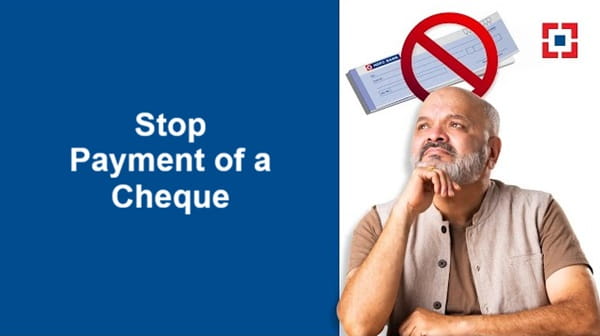
A stop-payment instruction is a request given by the drawer to the bank not to honour a particular cheque when it is presented.
For example, a person may issue a cheque and later instruct the bank to stop its payment because the cheque has been lost, the underlying transaction is disputed, the cheque was issued by mistake, or another circumstance has arisen.
The banking instruction itself does not necessarily mean that the drawer has committed an offence. The legal consequences depend on the circumstances surrounding the cheque and whether the requirements of Section 138 are satisfied.
Can a Bank Legally Stop the Payment?
Yes. A customer can generally give instructions to the bank requesting that payment of a cheque be stopped, subject to the bank’s procedures and the stage at which the instruction is received.
However, stopping payment is different from cancelling the underlying legal obligation represented by the cheque.
If the cheque represents a genuine legally enforceable debt and the payee presents it for payment, a stop-payment instruction can result in the cheque being returned unpaid. That dishonour can potentially trigger Section 138 proceedings.
What Has the Supreme Court Said?
The Supreme Court addressed this issue in Modi Cements Ltd. v. Kuchil Kumar Nandi. The Court held that even when a cheque is dishonoured because the drawer instructed the bank to stop payment, Section 138 can apply. The Court also rejected the argument that giving the stop-payment instruction before presentation automatically prevents prosecution.
The reasoning is important because otherwise a drawer could potentially issue a cheque against a debt and then avoid the consequences of dishonour simply by instructing the bank not to pay it.
The Supreme Court has subsequently reiterated that stop-payment dishonour does not, by itself, take the cheque outside Section 138.
Does Stop Payment Automatically Mean a Criminal Offence?
No. A stop-payment instruction does not automatically establish criminal liability.
Section 138 contains several statutory requirements. Broadly, the cheque must have been issued for the discharge, wholly or partly, of a legally enforceable debt or other liability, and it must be dishonoured in circumstances covered by the provision. The prescribed demand-notice and payment requirements must also be satisfied.
The Supreme Court has recognised that the presumption under Section 139 is rebuttable. Therefore, the drawer may raise a legally sustainable defence showing, for example, that there was no legally enforceable debt or that the circumstances provide a valid basis to rebut the statutory presumption.
What If the Drawer Had a Genuine Reason to Stop Payment?
The reason for stopping payment can become important in the legal proceedings.
Consider a situation where a cheque was issued in connection with a transaction, but the underlying obligation was subsequently cancelled or otherwise legally extinguished. If the drawer can establish facts sufficient to rebut the statutory presumption and show that no legally enforceable liability existed when the cheque was presented, the Section 138 case may not succeed.
However, simply claiming that the cheque was stopped for a genuine reason does not automatically end the matter. The relevant facts and evidence must support the defence.
Courts examine the underlying transaction, documents, communications, payment records and other circumstances.
What Happens After Stop-Payment Dishonour?
If the cheque is returned unpaid because of a stop-payment instruction, the payee may consider the statutory procedure under Section 138.
Generally, this involves:
- Presentation of the cheque within its applicable validity period.
- Receipt of information from the bank regarding dishonour.
- Sending a written demand notice to the drawer within the statutory period.
- Giving the drawer the prescribed opportunity to make payment.
- Initiating a complaint within the applicable limitation period if the statutory requirements are fulfilled and payment is not made.
Because the statutory timelines are important, the payee should preserve the original cheque, bank return memo, notice, proof of service and documents relating to the underlying transaction.
What Defences May Be Available?
A drawer facing proceedings may dispute the existence or enforceability of the alleged debt or liability and may seek to rebut the statutory presumption under Section 139.
Depending on the facts, relevant issues may include:
- Whether a legally enforceable debt existed
- Whether the cheque was issued for the alleged liability
- Whether the cheque amount had already been paid
- Whether the transaction was cancelled or otherwise discharged
- Whether statutory requirements were followed
- Whether the drawer can establish circumstances supporting the defence
The availability and strength of any defence depend on the evidence and circumstances of the particular case.
Why Is the Legal Position Important?
The legal position prevents a stop-payment instruction from becoming a simple method of avoiding cheque liability. The Supreme Court has emphasised that cheque transactions are intended to carry credibility and that Section 138 should not become ineffective merely because payment is stopped after a cheque has been issued.
At the same time, the law does not mean that every stopped cheque results in conviction. The existence of a legally enforceable liability and compliance with the statutory requirements remain important.
Conclusion
Stop payment of a cheque is legally possible as a banking instruction in India, but it is not an automatic defence against cheque-bounce proceedings. If a cheque issued towards a legally enforceable debt is dishonoured because payment was stopped, Section 138 of the Negotiable Instruments Act may apply, subject to its statutory conditions.
The Supreme Court’s decision in Modi Cements Ltd. v. Kuchil Kumar Nandi established that a stop-payment instruction does not by itself prevent Section 138 proceedings. However, the drawer can still contest liability and attempt to rebut the statutory presumption based on the facts and evidence of the case.
For an actual cheque dispute, preserving the cheque, bank memo, transaction records and correspondence is important, and legal advice should be obtained before relying on a particular defence or initiating proceedings.