PAN is generally required when opening a regular bank account in India, but having a PAN card is not the only route in every situation. Under the RBI’s KYC framework, banks generally obtain the customer’s Permanent Account Number (PAN) or Form No. 60, along with the other documents required for customer due diligence. Therefore, a person who does not have a PAN may be able to open an eligible bank account by submitting the prescribed declaration instead.
The exact requirements can vary according to the type of account, customer category and applicable tax and KYC rules.
What Is PAN?
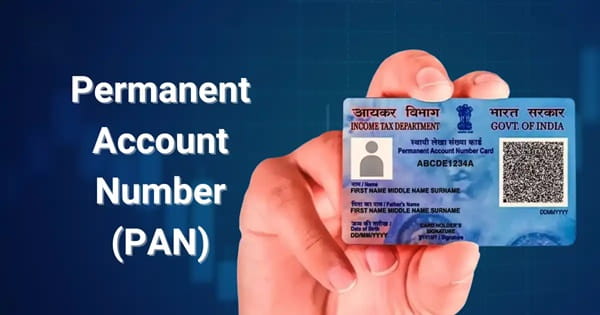
PAN stands for Permanent Account Number. It is a unique identification number issued by the Income Tax Department for purposes connected with taxation and certain financial transactions.
Banks use PAN information as part of their customer identification and regulatory processes. PAN can also be important when reporting specified financial transactions to the tax authorities.
However, PAN should not be confused with KYC itself. KYC is a broader process involving identity and address verification, while PAN is one of the identification details that may be required under applicable rules.
Is PAN Required for a Regular Bank Account?
For an ordinary account-based banking relationship, the RBI’s KYC framework requires regulated entities to obtain PAN or an equivalent e-document, or Form No. 60, from an individual as part of customer due diligence.
This means that the practical answer is slightly different from simply saying “PAN is always mandatory.”
A customer who already has PAN will generally provide it to the bank. A person who does not possess PAN may, where permitted, provide the prescribed alternative declaration.
Other KYC documents and verification requirements still apply.
What Is Form No. 60?
Form No. 60 is a declaration used by certain persons who do not have a PAN and undertake transactions for which PAN quoting is required under the applicable income-tax rules.
RBI’s KYC framework specifically recognises Form No. 60 as an alternative to PAN in applicable circumstances.
Therefore, not having a PAN does not necessarily mean that an individual can never open a bank account. The bank will determine whether the account and circumstances qualify for the alternative procedure.
Can a Bank Refuse an Account Without PAN?
A bank may require PAN or Form No. 60 as part of its applicable KYC and tax-compliance requirements.
If a customer has neither PAN nor a valid basis for submitting the alternative declaration, the bank may be unable to complete the required customer due diligence for a normal account.
However, RBI’s framework also recognises small accounts that can be opened under simplified conditions, subject to prescribed limits and requirements. These accounts are subject to restrictions on credits, balance and withdrawals.
Therefore, the type of account being opened matters.
What Are Small Accounts?
A small account is a bank account opened under simplified KYC conditions for eligible individuals.
RBI’s current KYC guidance describes limits including:
- Aggregate credits of up to ₹1 lakh in a financial year
- Maximum balance of ₹50,000 at any time
- Aggregate withdrawals and transfers of up to ₹10,000 in a month
Such accounts operate subject to the conditions prescribed under the KYC framework.
A small account should not therefore be treated as an unrestricted substitute for a regular bank account.
Is PAN Required for Minors?
The requirements for a minor can depend on how the account is opened and who operates it.
For example, a minor’s account may involve a parent or guardian, and the bank will apply the relevant KYC requirements to the customer and the person authorised to operate the account.
Customers should therefore check the particular bank’s requirements rather than assuming that every minor account follows exactly the same procedure as an adult individual account.
What About Joint Bank Accounts?
Joint-account applicants are generally subject to applicable customer-identification and KYC requirements.
Where PAN is required, the bank may request PAN or the prescribed alternative declaration from the relevant account holders, depending on the applicable rules and circumstances.
Each applicant should provide accurate information rather than using another person’s PAN.
Is PAN the Same as Aadhaar for Bank Account Opening?
No. PAN and Aadhaar serve different purposes.
Aadhaar can be used as an officially valid document in circumstances permitted under the KYC framework, while PAN is separately required or obtained under applicable tax and KYC rules. RBI’s framework lists PAN or Form No. 60 separately from the identity/address-document requirements.
Therefore, providing Aadhaar does not automatically mean that a customer can ignore PAN or the applicable Form No. 60 requirement.
What If You Do Not Have PAN?
A person without PAN should first ask the bank whether Form No. 60 is applicable to the proposed account and transaction.
If the person is eligible for PAN and needs one for broader financial or tax purposes, obtaining PAN may be more practical.
The Income Tax Department currently provides an Instant e-PAN facility for eligible individuals who have not previously been allotted PAN, subject to the applicable conditions.
Should You Provide a False PAN?
No. Customers should never provide another person’s PAN or submit false information simply to complete account opening.
Incorrect or fraudulent information can create KYC, tax and legal complications. If there is a genuine problem with PAN details, the customer should resolve it through the bank and the Income Tax Department’s authorised processes.
What Documents Are Usually Needed?
Apart from PAN or Form No. 60 where applicable, banks generally require documents and information needed to complete customer due diligence.
Depending on the customer and account, these can include:
- Officially valid identity/address documents
- Photograph or equivalent digital identification
- Mobile number and contact details
- Information about occupation or business
- Financial information where required
- Additional documents requested under the applicable KYC framework
The exact list depends on the bank, account type and customer’s circumstances.
Conclusion
PAN is generally required when opening a regular bank account in India, but it is not accurate to say that every person must possess a PAN card before any bank account can be opened. RBI’s KYC framework provides for PAN or Form No. 60 in applicable cases, while simplified small-account provisions can allow eligible customers to operate accounts subject to specified limits.
Customers should provide accurate PAN or Form No. 60 information and complete the other applicable KYC requirements. If a person does not have PAN, they should ask the bank whether Form No. 60 or a small-account facility is available in their particular circumstances.
Because tax and banking requirements can differ depending on the account and transaction, the bank’s current requirements and applicable Income Tax rules should be checked before opening the account.