No, Aadhaar is not universally mandatory for opening a bank account in India. Banks must complete the applicable KYC requirements, but the RBI’s current framework allows individuals to establish identity through different permitted routes. Aadhaar can be used as an officially valid document in specified circumstances, but it is not the only KYC option available. The Supreme Court has also held that mandatory linking of Aadhaar with bank accounts, as imposed under the earlier regulatory framework, was unconstitutional.
The exact documents and verification method depend on the type of account, the customer’s circumstances and the KYC process used by the bank.
What Is Aadhaar?
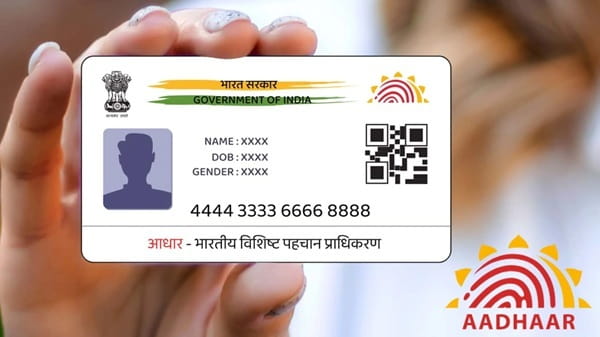
Aadhaar is a 12-digit identification number issued by the Unique Identification Authority of India (UIDAI) to eligible residents.
In banking, Aadhaar can be useful for identity verification and digital KYC processes. However, Aadhaar should not be confused with the entire KYC process. KYC involves establishing and verifying customer identity and other relevant information required under banking regulations.
The RBI’s current KYC framework lists Aadhaar among the documents that may be used as an Officially Valid Document (OVD), subject to the conditions specified under the framework.
Is Aadhaar the Only Document Accepted for KYC?
No.
The RBI’s KYC framework provides for officially valid documents and other permitted identification methods. Depending on the customer’s circumstances, banks may accept documents such as a passport, driving licence, proof of possession of Aadhaar, voter identity card, NREGA job card or other documents recognised under the applicable rules.
Therefore, a person who does not want to use Aadhaar should ask the bank which alternative officially valid documents it accepts for the particular account-opening process.
The bank must still be able to complete the required customer identification and due diligence.
What Did the Supreme Court Say About Aadhaar and Bank Accounts?
The Supreme Court addressed the issue of mandatory Aadhaar-bank-account linking in its 26 September 2018 Aadhaar judgment.
The Court held that making Aadhaar linking compulsory for bank accounts in the form then prescribed was disproportionate. It specifically considered the requirement that existing bank accounts could be deactivated if Aadhaar was not linked and concluded that such mandatory linking did not satisfy the constitutional test of proportionality.
This judgment is important when considering the proposition that every person must have Aadhaar to maintain or open a bank account.
Can Aadhaar Be Used for Opening a Bank Account?
Yes.
Aadhaar can be used as part of the KYC process where permitted by the applicable framework. The RBI’s current KYC guidance states that regulated entities may obtain an officially valid document including Aadhaar, subject to the conditions prescribed under the KYC rules.
Aadhaar-based authentication can also be used in certain digital account-opening processes. For example, eligible non-face-to-face accounts may be opened using Aadhaar OTP-based e-KYC, subject to applicable conditions.
Thus, Aadhaar can make certain account-opening procedures more convenient, but convenience should not be confused with universal legal compulsion.
What If You Do Not Have Aadhaar?
A person without Aadhaar can ask the bank about alternative KYC routes.
Depending on the circumstances, the bank may use another officially valid document, CKYC information, video-based customer identification or another permitted process.
The RBI’s framework also recognises small accounts, which can be opened under simplified KYC conditions subject to specified restrictions.
The availability of a particular route depends on the customer’s circumstances and the bank’s applicable procedures.
What Is CKYC?
Central KYC (CKYC) is a centralised KYC system that allows customer KYC records to be stored and retrieved through the Central KYC Registry.
Where applicable conditions are satisfied, a bank may use the customer’s existing KYC information instead of repeatedly collecting the same documents.
This can make account opening or updating KYC more convenient, although the bank may still request additional information when required under the applicable regulatory framework.
Can a Bank Ask for Aadhaar?
A bank may request Aadhaar as one of the permitted KYC documents or offer Aadhaar-based authentication as an available method. However, whether the customer must provide Aadhaar specifically depends on the applicable legal and regulatory requirements.
If a customer is told that Aadhaar is the only possible option, the customer can ask the bank to identify the applicable rule and whether another officially permitted KYC document or process is available.
The customer’s ability to use an alternative route can depend on the type of account and the specific KYC circumstances.
Is Aadhaar Mandatory for Small Accounts?
Small accounts operate under simplified KYC conditions and prescribed limits.
The RBI’s current guidance describes limits including aggregate credits of up to ₹1 lakh in a financial year, a maximum balance of ₹50,000, and aggregate withdrawals and transfers of up to ₹10,000 per month.
These accounts are subject to specific conditions and should not be treated as unrestricted substitutes for fully KYC-compliant regular accounts.
What Documents May Be Needed Without Aadhaar?
Depending on the account and bank, a customer may be able to use another officially valid document.
Common examples can include:
- Passport
- Driving licence
- Voter identity card
- NREGA job card
- Other documents recognised under applicable KYC rules
PAN or Form No. 60 may also be required separately where applicable. The exact combination depends on the account-opening requirements.
What Should You Do If a Bank Insists on Aadhaar?
If a bank says Aadhaar is compulsory, ask whether the requirement is:
- A legal requirement,
- A bank-specific process, or
- A particular digital KYC method.
You can also ask whether an alternative KYC procedure is available.
Customers should use official bank channels and avoid giving Aadhaar copies, OTPs or other sensitive information to unverified intermediaries.
Conclusion
Aadhaar is not universally mandatory for opening a bank account in India. It is an important and permitted KYC document, and Aadhaar-based authentication can be used for certain account-opening processes, but the RBI’s framework provides other methods of customer identification as well.
The Supreme Court’s 2018 judgment also rejected the then-existing requirement that bank accounts could be made inoperative merely because Aadhaar was not linked.
A person without Aadhaar should therefore ask the bank about alternative KYC methods available for the particular account. The final documentation requirement depends on the account type, applicable KYC rules and the customer’s individual circumstances.