Hospitalisation is stressful enough without having to understand the claim procedures at the last minute. One detail can make a noticeable difference: whether the hospital is part of the insurer’s network.
A network hospital usually allows cashless claim processing, whereas treatment at a non-network hospital generally follows the reimbursement route. Both can involve valid claims, but the experience for the patient and family can differ from admission to final settlement.
The Difference Starts at the Hospital Desk
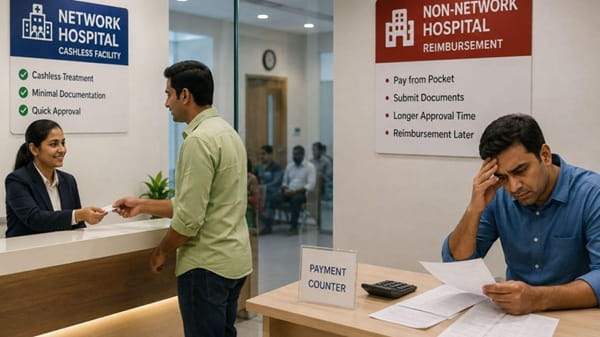
The first change appears during admission. At a network hospital, the insurance desk can send a cashless request to the insurer for review. If the insurer approves the request under the policy terms, it settles eligible expenses directly with the hospital.
At a non-network hospital, this cashless arrangement is generally unavailable. The patient usually pays the hospital and later submits a reimbursement claim.
Network Hospitalisation Reduces Upfront Claim Handling
At a network hospital, approved expenses can be settled directly between the insurer and hospital, reducing the need for the family to manage the full admissible bill upfront. For those considering top-up health insurance for senior citizens, understanding this cashless process can also help in planning how different covers may support hospital expenses.
For the family, this can mean:
● Less need to arrange the entire admissible hospital bill upfront.
● Hospital support for sending cashless claim documents.
● Claim assessment beginning during the hospital stay.
● Direct settlement of approved expenses with the hospital.
The policyholder may still have to pay expenses that are not admissible under the policy.
Non-network Hospitalisation Shifts More Work to the Policyholder
At a non-network hospital, the main difference is the claim process. The patient usually pays the hospital bill first and then applies for reimbursement. This places more responsibility on the policyholder to manage the required records properly.
Key requirements may include:
● Hospital bills and payment receipts.
● Discharge summary and prescriptions.
● Investigation and diagnostic reports.
● Other documents requested for claim assessment.
The insurer reviews these records and reimburses eligible expenses according to the policy terms.
Where the Claim Experience Actually Differs
The main difference lies in how payment, paperwork and claim coordination are handled during hospitalisation.
|
Claim Stage |
Network Hospital |
Non-Network Hospital |
|
At admission |
Cashless requests can be initiated. |
The patient usually arranges payment. |
|
During treatment |
Hospital and insurer coordinate claim information. |
The patient should preserve bills and medical records. |
|
Payment route |
The approved amount is paid directly to the hospital. |
The eligible amount is reimbursed after claim assessment. |
|
Paperwork burden |
The hospital desk usually assists with cashless documentation. |
The policyholder generally submits reimbursement documents. |
|
Final out-of-pocket amount |
Depends on policy terms and non-payable items. |
Depends on eligible reimbursement and policy terms. |
Why Hospital Network Matters More in Senior Planning
Older adults may need planned procedures, emergency admissions or repeated medical care, so families can benefit from knowing which hospitals are included in the insurer’s cashless network. Easy access to a suitable network hospital can make claim handling more convenient during treatment.
Families should check the network list, understand how the policy works and keep important policy details accessible. Network status can support cashless processing, but claim approval still depends on eligibility, treatment details, available coverage and other applicable policy terms.
Look beyond the Product Label
People may search for health insurance vs medical insurance expecting separate claim systems. In everyday usage, the terms can overlap, but policy wording matters more than the label. The claim experience depends on cashless access, reimbursement procedures, waiting periods, sub-limits, co-payment clauses and documentation rules.
Read the policy schedule and wording before relying on the product name. Check how claims are started, where cashless treatment is available and what must be submitted for reimbursement.
What Families Can Check before Hospitalisation
A few practical checks can reduce confusion during admission:
● Confirm whether the hospital is currently in the insurer’s network.
● Keep the policy number, health card and insurer contact details available.
● Inform the insurer or hospital insurance desk as required.
● Ask which expenses the patient must pay directly.
● Save prescriptions, bills, reports and discharge papers.
● Review claim timelines and document requirements in the policy.
Final Thoughts
Both network and non-network hospitalisation can involve valid health insurance claims, but the experience differs. Network treatment generally follows a cashless process, whereas non-network treatment commonly involves paying first and seeking reimbursement later.
More important than the hospital category is whether the treatment and expenses meet policy conditions. Checking the network, understanding the claim route and keeping documents organised can help families better manage hospitalisation.