If you have ever paid a bill online and been given a unique payment reference number, or transferred money to what looked like a regular bank account but was specific to your transaction, you have already interacted with a virtual account without knowing it.
Virtual accounts are one of those things that most consumers never notice, but businesses rely on them constantly. Once you understand what they are and how they work, it becomes pretty clear why.
So What Exactly Is a Virtual Account?
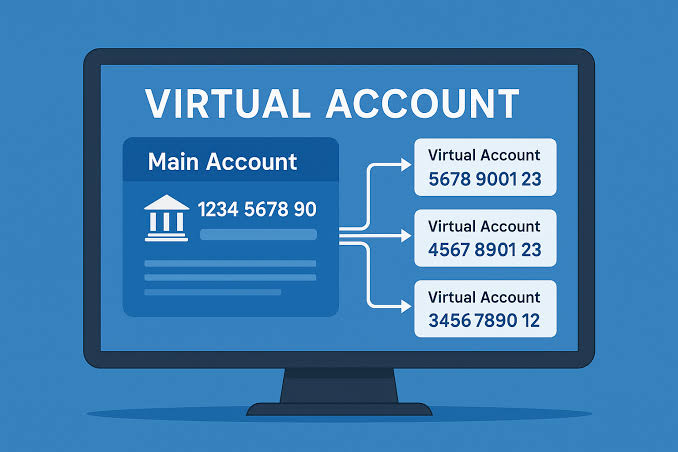
A virtual account is a unique account number that is linked to a real, underlying bank account. It looks and behaves like a regular bank account from the outside. Someone can transfer money to it via UPI, NEFT, IMPS, or RTGS just like they would to any normal account. The funds land in the actual bank account behind it.
The key difference is that the virtual account number itself is generated digitally, can be created in bulk, and is often tied to a specific customer, transaction, or purpose. One company might have thousands of virtual accounts, all funnelling money into the same underlying account, with each virtual account carrying its own identity.
Think of it like a post office box system. All the letters eventually land in one building, but each PO box number tells you exactly who the letter was meant for and where it came from.
How Is This Different From a Regular Bank Account?
A regular bank account requires KYC documentation, branch visits or formal application processes, and typically a minimum balance. It is issued in the name of an individual or a business entity.
Virtual accounts, on the other hand, are created programmatically. A business can generate one in seconds through an API, assign it to a specific customer or order, and deactivate it once the purpose is served. There is no separate KYC process for each virtual account, no branch visits, and no minimum balance requirements per account.
This is what makes them so useful at scale. A business dealing with hundreds or thousands of incoming payments every day cannot manually create a bank account for each one. Virtual accounts solve that problem entirely.
How Do Businesses Actually Use Virtual Accounts?
Payment Collection and Automatic Reconciliation
This is the most common use case by far. Businesses that collect payments from multiple customers at the same time face a serious reconciliation headache. When 500 people transfer money to the same bank account on the same day, how do you figure out which payment came from which customer?
With virtual accounts, each customer gets their own unique account number. When they transfer money, the system immediately knows who it came from, which order or invoice it corresponds to, and how to update the records. No manual matching needed. The reconciliation happens automatically.
E-Commerce and Marketplace Platforms
Online marketplaces need to collect money from buyers and distribute it to multiple sellers, often after deducting a platform commission. Virtual accounts make this clean and traceable. Each seller on the platform can be assigned a virtual account, and funds collected for their orders sit in identifiable pools before being settled out.
Platforms like these, built using virtual accounts, can handle thousands of daily transactions without their finance teams drowning in spreadsheet matching.
Lending and NBFC Use Cases
Loan disbursement and repayment tracking is another strong use case. An NBFC or digital lender can assign a virtual account to each borrower specifically for their EMI payments. When a payment comes in, the system knows instantly which loan account it belongs to, whether it is a full payment or partial, and whether the borrower is on time. This removes the need for manual payment tagging entirely.
Security Deposits and Escrow-Style Payments
Businesses in real estate, logistics, or rental services often need to hold funds on behalf of customers before releasing them under specific conditions. Virtual accounts can serve an escrow-like function here, holding funds tied to a specific transaction until the business logic says it is time to release or refund them.
Subscription and SaaS Businesses
For software or service businesses billing customers on a recurring basis, virtual accounts help track which customer’s payment has come in and which has not, without building complex internal systems to match bank statements against a customer database.
Who Provides Virtual Accounts in India?
Virtual accounts in India are typically offered by banks directly to large enterprise clients, or through fintech infrastructure providers that have banking partnerships in place. API-first platforms like Decentro sit in the middle, giving businesses of all sizes access to virtual account infrastructure without needing to negotiate directly with a bank or build the plumbing themselves.
This has made virtual accounts accessible not just to large corporations but also to mid-sized startups and growing businesses that would not have had access to this kind of infrastructure a few years ago.
A Few Things Worth Knowing
Virtual accounts are not the same as wallets. A wallet stores value inside a closed system. A virtual account is a gateway into the actual banking system, with real settlement happening through regulated banking rails.
Virtual accounts also do not hold balances independently. The money in any virtual account is part of the balance of the master account it is linked to. The virtual account is just a routing and identification layer on top.
And while they are largely invisible to the end user making a payment, they do a significant amount of heavy lifting behind the scenes for any business that handles payments at any meaningful scale.
The Bottom Line
Virtual accounts are not a new concept, but they have become a lot more accessible and easy to implement in recent years. For any business dealing with multiple incoming payments, managing collections from a customer base, or running a platform where money moves between parties, virtual accounts are one of the more practical tools available in the Indian banking ecosystem.
They keep reconciliation clean, reduce manual work, and make it possible to handle payment operations at scale without building an internal banking system from scratch.