No, opening a bank account using false, forged, or fraudulently obtained documents is not legally permitted in India. Banks are required to follow Know Your Customer (KYC) requirements when establishing and maintaining customer accounts, and deliberately providing false identity or address documents can lead to account rejection, closure, investigation, and potentially criminal prosecution. Depending on the circumstances, offences under the Bharatiya Nyaya Sanhita, 2023 (BNS) and other applicable laws may arise.
The legal consequences depend on what document was used, whether it was forged, how it was obtained, the purpose of opening the account, and whether the account was subsequently used for fraud or another unlawful activity.
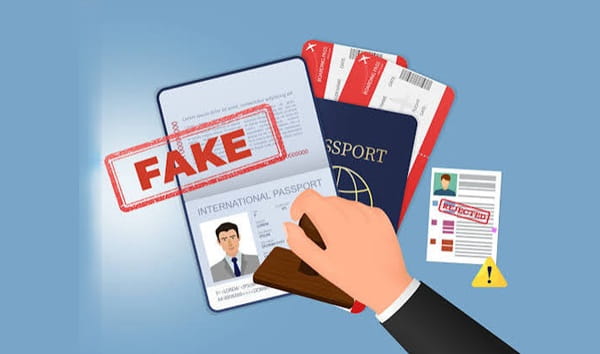
What Are False Documents?
False documents can include documents that have been fabricated, altered, or fraudulently created to appear genuine.
Examples may include:
- A forged identity document
- A fabricated address proof
- A document belonging to another person used without authority
- An altered government document
- A counterfeit financial or employment document
- A digitally manipulated document submitted as genuine
There is an important distinction between submitting a document containing an innocent error and deliberately submitting a false document knowing that it is inaccurate or forged.
Why Do Banks Require KYC Documents?
KYC procedures help banks establish the identity and address of customers and understand the nature and purpose of banking relationships.
The RBI’s KYC framework requires regulated entities to follow customer-identification and verification procedures. These requirements form part of India’s broader system for preventing money laundering, terrorist financing and other financial crimes.
Therefore, providing false information during account opening can interfere with the bank’s ability to identify the actual customer and assess the purpose of the account.
Can Using a Forged Document Amount to Forgery?
Yes, depending on the circumstances.
Under Section 335 of the BNS, making a false document or electronic record can fall within the statutory definition of forgery-related conduct when the required intention exists.
Section 336 specifically deals with forgery. Ordinary forgery can attract imprisonment of up to two years, or fine, or both. Where forgery is committed with the intention that the forged document or electronic record will be used for cheating, the punishment can extend to seven years and fine.
The precise provision depends on the nature of the document and the person’s conduct.
What If the False Document Is a Government Identity Document?
The consequences can be more serious where the document is an identity document issued by the Government.
Section 337 of the BNS addresses forgery of certain records and documents, including government-issued identity documents such as voter identity cards and Aadhaar cards. The provision provides for imprisonment of up to seven years and fine for the specified conduct.
Therefore, using or creating a forged government identity document for opening a bank account can potentially involve more serious criminal consequences than an ordinary documentation error.
What If Someone Uses Another Person’s Documents?
Using another person’s genuine identity document without authority can create separate legal issues.
For example, suppose a person obtains another individual’s identity document and uses it to open a bank account while pretending to be that person. Depending on the circumstances, the conduct may involve identity-related fraud, cheating, forgery, or other applicable offences.
The fact that the underlying document was originally genuine does not necessarily make its unauthorized use lawful.
What If the Account Is Used for Fraud?
Opening an account using false documents becomes particularly serious when the account is subsequently used for unlawful financial activity.
For example, an account created using a false identity could be used to receive proceeds of online fraud, transfer stolen money, or conceal the identity of the person controlling the funds.
In such circumstances, investigators may examine the account-opening documents, transaction history, communications, devices and links between the account holder and other participants.
Depending on the evidence, offences involving cheating, forgery, dishonest conduct or other financial crimes may be considered under the applicable law.
Is the Account Holder Always Criminally Liable?
Not automatically.
Criminal liability generally depends on the person’s conduct, knowledge, intention and the legal ingredients of the particular offence.
For example, a genuine customer who accidentally submits an outdated document or makes an innocent clerical error is not necessarily in the same position as someone who deliberately creates a false identity and submits forged documents to obtain banking facilities.
The evidence surrounding the account-opening process can therefore be important.
What Happens If a Bank Discovers False Documents?
A bank may take appropriate action under its applicable policies and regulatory obligations. Depending on the circumstances, the account may be restricted or closed, and the bank may seek clarification or additional documentation.
Where the circumstances indicate suspected fraud or other unlawful activity, information may also become relevant to regulatory or law-enforcement processes.
Banks maintain customer and transaction records, which can be important during an investigation.
What Evidence May Be Examined?
In a suspected false-document case, authorities may examine:
- Account-opening forms
- KYC documents
- Identity and address records
- Bank statements
- Transaction history
- CCTV or branch records, where available
- Device and login information
- Emails and messages
- Application records
- Signature or document examination
- Communications with intermediaries
The evidence can help establish who opened the account and whether the documents were knowingly falsified or misused.
What If Someone Used Your Documents to Open an Account?
If you discover that your identity documents have been used without your permission to open a bank account, act promptly.
You should notify the concerned bank through its official channel, preserve evidence showing your identity and report suspected fraud to the appropriate authorities. Keep copies of complaints, acknowledgements and relevant communications.
You should also monitor your other financial accounts and credit records for unfamiliar activity.
Conclusion
Opening a bank account using deliberately false or forged documents is not legally permitted in India. Banks operate under KYC requirements designed to verify customer identity and address and to help prevent financial crimes.
Where a person knowingly creates or uses false documents, the conduct may amount to forgery under the Bharatiya Nyaya Sanhita, 2023. Section 336 provides different punishments depending on the nature and purpose of the forgery, while Section 337 specifically addresses certain forged government records and identity documents.
However, an innocent documentation mistake should not automatically be equated with criminal forgery. The person’s intention, the nature of the document, how it was obtained and how the account was used are important factors.
Anyone whose identity documents have been misused should contact the relevant bank promptly, preserve evidence and consider obtaining qualified legal advice where fraud or criminal activity is suspected.