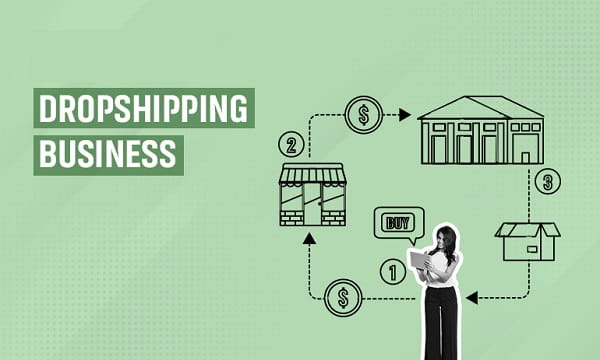
The dropshipping business is one of the most popular online business models because it allows entrepreneurs to sell products without maintaining physical inventory. Instead of purchasing and storing products in advance, a dropshipping business partners with suppliers who manufacture, store, package, and ship products directly to customers. This model significantly reduces startup costs and makes it easier for new entrepreneurs to enter the e-commerce market.
A dropshipping business typically operates through an online store, where customers place orders for products such as electronics, clothing, beauty products, home décor, pet supplies, fitness equipment, accessories, and more. Once an order is received, the retailer forwards it to a supplier, who fulfills and ships the product directly to the customer. The business earns profit from the difference between the supplier’s price and the retail selling price.
In 2026, dropshipping continues to grow due to the increasing popularity of online shopping, global supplier networks, digital marketing, and user-friendly e-commerce platforms. Entrepreneurs can start a business with relatively low investment and serve customers across multiple countries. However, they should also consider challenges such as supplier dependency, lower profit margins, shipping delays, and intense market competition before choosing this business model.
Understanding the advantages and disadvantages of a dropshipping business helps entrepreneurs determine whether this online business model aligns with their goals, skills, and long-term growth strategy.
Advantages of a Dropshipping Business
1. Low Startup Investment
One of the biggest advantages of a dropshipping business is that it requires relatively low initial investment.
Entrepreneurs do not need to spend money on:
- Warehouse facilities
- Inventory purchases
- Storage equipment
- Packaging operations
This makes it easier for beginners to start an online business.
2. No Inventory Management
Suppliers handle:
- Product storage
- Inventory management
- Packaging
- Shipping
Business owners can focus on marketing, customer service, and sales growth.
3. Wide Product Selection
A dropshipping business can sell thousands of products without physically stocking them.
Popular categories include:
- Electronics
- Fashion
- Home décor
- Beauty products
- Kitchen accessories
- Pet supplies
- Fitness equipment
- Office products
Businesses can easily expand their product catalog.
4. Location Flexibility
Since operations are managed online, entrepreneurs can run a dropshipping business from almost anywhere with an internet connection.
Remote management provides excellent flexibility.
5. Easy Business Scalability
As order volume increases, suppliers continue handling inventory and shipping.
Business owners can focus on:
- Marketing
- Customer acquisition
- Product research
- Brand development
This allows easier business expansion.
6. Global Selling Opportunities
Online stores can reach customers worldwide through:
- E-commerce websites
- Online marketplaces
- Social media platforms
- Digital advertising
International selling increases revenue potential.
7. Lower Operational Risk
Since inventory is not purchased in advance, businesses reduce the risk of:
- Unsold stock
- Warehouse expenses
- Inventory damage
- Overstocking
This creates greater financial flexibility.
8. Easy Product Testing
Entrepreneurs can quickly add or remove products based on customer demand.
Testing new products requires minimal financial investment compared to traditional retail businesses.
Disadvantages of a Dropshipping Business
1. Lower Profit Margins
One of the biggest disadvantages is relatively lower profit margins compared to businesses that manufacture or purchase inventory in bulk.
Competition often limits pricing flexibility.
2. Dependence on Suppliers
Business success depends heavily on supplier performance.
Problems may include:
- Shipping delays
- Product shortages
- Quality issues
- Inventory inaccuracies
Supplier reliability directly affects customer satisfaction.
3. Strong Competition
Many entrepreneurs sell similar products from the same suppliers.
Businesses must differentiate themselves through:
- Branding
- Customer service
- Marketing
- Product selection
Competition can be intense.
4. Limited Quality Control
Since products are shipped directly by suppliers, business owners have limited control over:
- Packaging
- Product quality
- Delivery speed
- Order accuracy
Quality issues may damage brand reputation.
5. Shipping Challenges
Customers may experience:
- Longer delivery times
- Multiple shipments
- Higher shipping costs
- International customs delays
Efficient supplier selection is important.
6. Customer Service Responsibilities
Although suppliers fulfill orders, customers contact the retailer regarding:
- Returns
- Refunds
- Damaged products
- Delivery issues
Excellent customer support remains essential.
7. Branding Limitations
Many suppliers ship products in generic packaging.
Creating a unique brand identity may require additional investment in private labeling or custom packaging.
8. Marketplace Policy Changes
Businesses selling through online marketplaces may be affected by:
- Policy updates
- Increased advertising costs
- Account restrictions
- Platform competition
Diversifying sales channels reduces business risk.
Tips for Building a Successful Dropshipping Business
A successful dropshipping business depends on product selection and customer satisfaction. Consider these practical strategies:
- Partner with reliable suppliers.
- Focus on high-demand niche products.
- Build a professional online store.
- Invest in digital marketing.
- Offer responsive customer support.
- Monitor supplier performance regularly.
- Use high-quality product images and descriptions.
- Build a recognizable brand identity.
- Track customer feedback.
- Diversify supplier relationships.
- Continuously research market trends.
Is a Dropshipping Business Profitable?
Yes, a dropshipping business can be profitable because it requires relatively low startup investment and allows entrepreneurs to sell products without maintaining inventory. Successful businesses generate revenue through effective product selection, digital marketing, branding, and customer service.
Profitability depends on choosing reliable suppliers, controlling advertising costs, maintaining customer satisfaction, optimizing pricing strategies, and building long-term brand value. Businesses that focus on quality products and strong marketing often achieve sustainable growth.
Conclusion
The dropshipping business remains one of the most accessible online business opportunities in 2026. Growing e-commerce adoption, global supplier networks, digital marketing platforms, and increasing online shopping continue to support industry growth.
Although entrepreneurs must manage challenges such as lower profit margins, supplier dependence, strong competition, limited quality control, shipping challenges, customer service responsibilities, branding limitations, and marketplace policy changes, the business provides numerous advantages, including low startup investment, no inventory management, a wide product selection, location flexibility, easy scalability, global selling opportunities, lower operational risk, and simple product testing.
Entrepreneurs who prioritize reliable suppliers, effective marketing, customer satisfaction, and strong brand development can build a successful and profitable dropshipping business.
FAQs
Q: What are the main advantages of a dropshipping business?
A: The main advantages include low startup investment, no inventory management, a wide product selection, location flexibility, business scalability, global selling opportunities, lower operational risk, and easy product testing.
Q: What are the disadvantages of a dropshipping business?
A: Common disadvantages include lower profit margins, dependence on suppliers, strong competition, limited quality control, shipping delays, customer service responsibilities, branding limitations, and marketplace policy changes.
Q: Is a dropshipping business profitable in 2026?
A: Yes, it can be profitable because it requires relatively low investment and provides access to global markets. Profitability depends on product selection, supplier reliability, marketing efficiency, pricing strategy, customer satisfaction, and operational management.
Q: What products can be sold through a dropshipping business?
A: Popular products include clothing, electronics, beauty products, home décor, pet supplies, fitness equipment, kitchen accessories, office products, mobile accessories, toys, and lifestyle products.
Q: How much investment is required to start a dropshipping business?
A: Investment depends on the business model. Major expenses typically include website development, domain registration, e-commerce platform fees, digital marketing, branding, software tools, customer support, and working capital.
Q: How can a dropshipping business attract customers?
A: Businesses can attract customers through search engine optimization (SEO), social media marketing, paid advertising, influencer collaborations, email marketing, content marketing, loyalty programs, attractive product listings, competitive pricing, and excellent customer service.
Q: What skills are required to run a successful dropshipping business?
A: Important skills include digital marketing, e-commerce management, product research, supplier management, customer service, branding, financial planning, search engine optimization, data analysis, inventory coordination, and business development.