For the majority of Indian business owners, managing GST during invoicing and return filing can be tiresome. The process is dynamic; one false step might turn into a small typo but quickly escalate into a major issue. If the authorities in 2026 notice any mistake on your invoices, the penalty can absorb all your income for a whole month, regardless of its size.
Here is where most business owners trip up and how you can shore up your defenses.
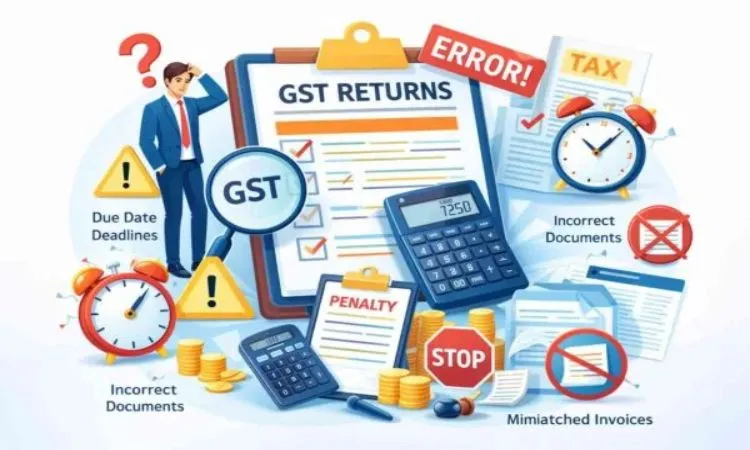
Why Small Details Matter On Your Tax Documents
The most common mistake is misclassifying products under the wrong tax slab. You might apply a 5% rate to an item that legally requires 12% due to a slight change in its HSN code description. When the audit hits, the government won’t just ask for the 7% difference; they’ll demand it with backdated interest that can exceed the original tax amount.
There are also some other popular issues that cause rejection or penalties, such as:
An Invalid or Deactivated GSTIN: Sending a B2B invoice to a client with the deactivated GSTIN number. The lack of a real-time check will prevent you from getting any tax benefits at all.
Mistakes in Classification of Supply Place: Misclassifying the supply as IGST (Inter-state) and CGST/SGST (Intra-state). A typical problem for businesses that expand beyond their home state borders.
The “Name Issue”: Even a small typo in a partner’s business name can lead to refusal of Input Tax Credit (ITC), creating extra stress for both sides.
Using GST invoice software helps protect against such mistakes. The application holds your master data, allowing you to always apply client information correctly. It’s essentially a second set of eyes that never gets tired, even during the frantic year-end rush.
The Hidden Danger of “Date Mismatches” and ITC Blockage
Filing errors aren’t always about the money; often, they are about the calendar. If you issue an invoice in one month but accidentally record it in the next, you trigger a “mismatch” in the GST portal. This doesn’t just hurt you; it hurts your customers. If your data doesn’t upload correctly, your customers cannot claim their Input Tax Credit, which ruins your professional reputation.
- Late Fees: Even if you paid every rupee of the tax, filing a document in the wrong period can lead to daily late fees that accumulate quietly in the background.
- Data Integrity: As your business scales, manual tracking becomes a nightmare. You end up spending more on “cleanup” than you would have spent on a proper system.
Reliable accounting software like Busy automate these repetitive fields. By syncing your sales date with your tax liability, the software ensures you aren’t paying fines for “clerical laziness.” Many owners hesitate over the cost of software, but a single penalty for a high-value invoice can cost significantly more than a full year’s subscription.
Streamlining for Long-Term Growth
The ultimate goal is to build a workflow where you don’t have to think about the law every time you ring up a sale. Consistency is what keeps tax officials satisfied; they look for a clean, repeatable pattern in your books.
- Automate the Basics: The software can automatically apply the correct HSN/SAC codes and GST tax rates based on current rules, helping you create accurate invoices faster.
- Audit Your Operations: Are there recurring errors in data entry? Does your staff forget to put in the E-way bill number every time?
- Empower Your Employees: With a user-friendly system, your team does not need a CA’s license to prepare an invoice.
GST management should be one of the easier tasks at your business. When you go the route of avoiding manual entries and opting for comprehensive software for small business owner means you don’t have to defend yourself against the tax authorities but focus on serving your customers better. Clean record-keeping goes beyond simply following the rules; it lets you expand your business without worrying about tax notices.