A savings account is the most basic and widely used banking product. For many people, it is the first step into the formal banking system. Salaries are credited here, bills are paid from here, and emergency funds are usually kept here. Whether someone earns regularly or occasionally, a savings account acts as the financial base for everyday money management.
Savings accounts are designed to offer safety, liquidity, and convenience, not high returns. While they are essential for daily banking needs, they also have limitations that make them unsuitable for long-term wealth creation.
Understanding both the advantages and disadvantages of a savings account helps in using it correctly and avoiding unrealistic expectations.
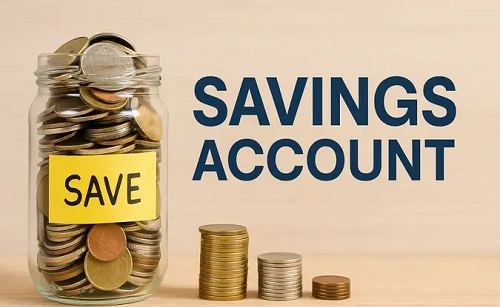
What Is a Savings Account?
A savings account is a deposit account opened by individuals to store money safely while earning a small amount of interest. It allows deposits and withdrawals as per bank rules and supports daily financial transactions.
Savings accounts are used for:
- Receiving income (salary, pension, transfers)
- Paying bills and EMIs
- Making digital payments
- Parking short-term or emergency funds
In India, savings accounts are regulated by banking norms and customer protection guidelines issued by the Reserve Bank of India.
How a Savings Account Works?
- An individual opens a savings account with required KYC
- Money is deposited in the account
- Interest is calculated on the balance
- Withdrawals and payments are allowed within limits
- The account supports ATM, UPI, and digital banking
Interest is usually calculated on a daily balance and credited periodically.
Advantages of Savings Account
1. Safe Place to Keep Money
The primary advantage of a savings account is safety.
- Money is kept securely with a regulated bank
- Risk of theft or loss is lower than holding cash
- Deposits are protected under banking safeguards
This makes savings accounts ideal for storing money securely.
2. High Liquidity
Savings accounts offer easy access to funds.
- Money can be withdrawn anytime
- ATM, UPI, and online banking provide instant access
- Suitable for emergencies and daily expenses
This liquidity is one of the biggest strengths of savings accounts.
3. Earns Interest on Balance
Unlike current accounts, savings accounts pay interest.
- Interest rates are modest but assured
- Helps offset inflation slightly
- Better than keeping idle cash
While returns are low, some interest is better than none.
4. Easy to Open and Maintain
Opening a savings account is simple.
- Minimal documentation
- Low initial deposit requirement
- Online and branch-based options
This accessibility makes savings accounts suitable for all income groups.
5. Supports Digital and Cashless Payments
Savings accounts are linked to:
- Debit cards
- UPI
- Mobile and internet banking
This enables seamless digital payments, bill payments, and fund transfers.
6. Encourages Saving Habit
By keeping money separate from cash:
- People are less likely to spend impulsively
- Regular saving habits are formed
- Financial discipline improves
Savings accounts are a foundation for good money habits.
7. Useful for Emergency Funds
Savings accounts are ideal for:
- Emergency reserves
- Short-term financial needs
- Immediate access situations
Liquidity and safety make them perfect for emergencies.
Disadvantages of Savings Account
Despite their importance, savings accounts have limitations.
1. Low Interest Rates
The biggest drawback is low returns.
- Interest often fails to beat inflation
- Purchasing power of money may decline
- Not suitable for long-term growth
Savings accounts are not investment tools.
2. Minimum Balance Requirement
Many banks require:
- Minimum or average balance
- Penalties if balance is not maintained
This can be burdensome for low-income customers.
3. Limited Number of Transactions
Savings accounts often have:
- Limits on monthly withdrawals
- Caps on free transactions
Exceeding limits may attract charges.
4. Not Suitable for Large-Scale Transactions
Savings accounts are meant for personal use.
- High-value or frequent transactions may be restricted
- Business use may violate account rules
Current accounts are better for business needs.
5. Interest Is Taxable
Interest earned on savings accounts is:
- Taxable beyond the exemption limit
- Added to total income
Post-tax returns are even lower for higher tax brackets.
6. Idle Money Loses Value Over Time
Keeping large balances idle:
- Results in opportunity loss
- Reduces long-term financial growth
Surplus funds should be invested elsewhere.
7. Charges on Additional Services
Banks may charge for:
- ATM usage beyond limits
- Cheque books
- SMS alerts
- Special service requests
These charges reduce overall value.
Savings Account vs Current Account (Quick Comparison)
| Feature | Savings Account | Current Account |
| Purpose | Personal saving & use | Business transactions |
| Interest | Yes | No |
| Transaction limit | Limited | High |
| Minimum balance | Lower | Higher |
| Overdraft facility | Rare | Common |
Who Should Use a Savings Account?
Savings accounts are suitable for:
- Salaried individuals
- Students
- Pensioners
- Homemakers
- Anyone managing personal finances
They are not ideal for:
- Business transactions
- Long-term wealth creation
Role of Savings Accounts in Financial Planning
Savings accounts work best as:
- Salary or income accounts
- Emergency fund holders
- Transaction accounts for daily use
They should be combined with:
- Fixed deposits
- Mutual funds
- Other investment options
Savings accounts are a base, not the full plan.
Common Mistakes to Avoid
- Keeping large idle balances
- Expecting high returns
- Ignoring minimum balance rules
- Using savings account for business activity
Awareness improves efficiency.
Final Thoughts
A savings account is not about growing wealth—it is about managing money safely and conveniently. It provides liquidity, security, and easy access, making it essential for daily financial life.
However, low returns and inflation impact mean savings accounts should not hold long-term surplus funds. They are best used as a transaction hub and emergency reserve, not as an investment vehicle.
A savings account protects money.
It does not multiply it.
Used correctly, it becomes the strongest foundation of personal finance.