In India, cheque fraud is not rare. Altered amounts, forged signatures, and fake cheques have caused serious losses to individuals, businesses, and banks. To control this risk, banks introduced a safety layer called the Positive Pay System (PPS).
If you use cheques for high-value payments, this system matters to you.
Let’s break it down clearly—what it is, how it works, why it’s useful, and where it falls short.
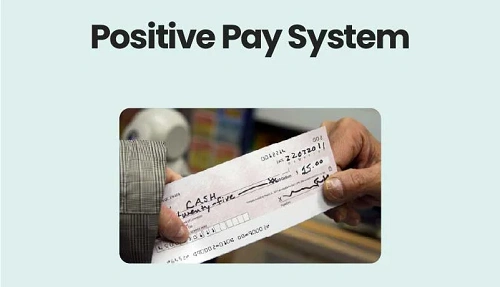
What Is the Positive Pay System?
The Positive Pay System is a cheque verification mechanism. Under this system, the cheque issuer (the account holder) shares key cheque details with the bank before the cheque is presented for clearing.
When the cheque reaches the bank, the system matches the details submitted by the customer with the actual cheque.
If they match, the cheque is cleared.
If they don’t, the cheque is flagged for verification or rejected.
In India, the system was introduced following guidelines issued by the Reserve Bank of India, mainly for cheques of high value (generally ₹50,000 and above, depending on the bank).
Why Was This System Introduced?
Cheque frauds usually happen in three ways:
- Amount alteration
- Payee name manipulation
- Forged signatures
Traditional cheque clearing depended heavily on manual checks. With rising volumes and faster clearing systems, manual verification alone was no longer enough.
The Positive Pay System adds customer confirmation into the process. That single step drastically reduces fraud risk.
Here’s the flow in simple terms:
Step 1: Cheque Issuance
You issue a cheque to a person or organization.
Step 2: Submission of Cheque Details
Before handing over the cheque—or immediately after—you submit key details to your bank through:
- Net banking
- Mobile banking app
- ATM
- Branch visit
The details usually include:
- Cheque number
- Cheque date
- Amount
- Payee name
Step 3: Cheque Presentation
The beneficiary deposits the cheque in their bank.
Step 4: System Matching
When the cheque comes for clearing, the bank’s system matches:
- Customer-submitted details
vs - Details on the physical cheque
Step 5: Decision
- Match found → Cheque is cleared
- Mismatch → Cheque is flagged, confirmation sought, or rejected
Is Positive Pay Mandatory?
No, but it is strongly recommended.
Most banks make it mandatory for:
- Cheques above ₹50,000 or ₹1 lakh
- Corporate accounts
- High-risk accounts
If you don’t submit details for a high-value cheque, the bank may:
- Delay clearance
- Reject the cheque
- Ask for manual confirmation
Benefits of the Positive Pay System
1. Strong Protection Against Cheque Fraud
This is the biggest advantage. Even if a cheque is stolen or altered, it won’t clear unless the details match what you submitted.
2. Customer-Controlled Verification
Earlier, verification depended only on the bank. Now, the account holder plays a direct role. That shifts control back to the customer.
3. Reduced Financial Loss
Fraud prevention means fewer disputes, fewer legal cases, and less stress—especially for businesses issuing multiple cheques.
4. Faster Resolution of Mismatches
If a cheque is flagged, banks can quickly contact the issuer. This avoids long investigations later.
5. Useful for Businesses and Institutions
Companies issuing high-value cheques regularly benefit the most. It creates a clear audit trail of issued cheques.
Limitations of the Positive Pay System
No system is perfect. Positive Pay has its weak points.
1. Extra Step for Customers
Customers must remember to submit cheque details every time. Forgetting this step can delay payments.
2. Not Foolproof Against Signature Forgery
If cheque details match but the signature is forged very accurately, the system may still pass the cheque unless manual checks catch it.
3. Dependency on Digital Access
Customers without:
- Smartphones
- Internet banking
- Nearby branches
may find it inconvenient.
4. Variation Across Banks
There is no single uniform rule across all banks. Threshold limits, processes, and timelines differ, which can confuse customers.
5. Delay in Urgent Payments
If details are submitted late or incorrectly, urgent payments may get stuck.
Who Should Definitely Use Positive Pay?
You should always use it if you are:
- Issuing cheques above ₹50,000
- Running a business or partnership firm
- Handling trust, society, or institutional funds
- Signing cheques on behalf of someone else
For occasional low-value cheques, the risk is lower—but for high-value transactions, skipping Positive Pay is risky.
What Happens If There Is a Mismatch?
When a mismatch occurs, banks usually:
- Put the cheque on hold
- Contact the issuer via call, SMS, or email
- Ask for confirmation or correction
If confirmation is not received within a specified time, the cheque may be returned unpaid.
Positive Pay vs Normal Cheque Clearing
| Feature | Normal Cheque | Positive Pay |
| Customer confirmation | No | Yes |
| Fraud risk | Higher | Much lower |
| Manual intervention | High | Reduced |
| Control with issuer | Limited | Strong |
Final Thoughts
The Positive Pay System is not about convenience. It is about control and safety.
Yes, it adds one extra step. Yes, it needs discipline.
But for high-value cheques, this system acts like a digital lock on a physical instrument. In today’s environment, where fraud methods keep evolving, relying only on signatures and manual checks is no longer enough.
If you still use cheques regularly, Positive Pay is not optional thinking—it’s smart banking.