Rural India is changing quickly. Better roads, internet connectivity, government schemes, and growing purchasing power are creating new opportunities in villages. Many people now prefer to start businesses in their hometowns instead of moving to big cities.
Village businesses often have lower costs. Rent, labor, and raw materials are cheaper compared to urban areas. This makes it easier for entrepreneurs to start small and gradually grow their income.
In 2026, several industries such as agriculture services, small manufacturing, food processing, and rural retail are expected to grow strongly. Below are five practical and profitable business ideas that can work well in Indian villages.
1. Dairy Farming Business
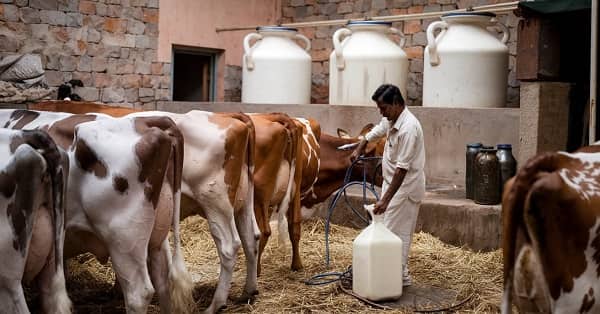
Dairy farming remains one of the most profitable and reliable businesses in rural India. Milk and dairy products are consumed daily, so demand never stops.
Starting with just a few cows or buffaloes can generate a steady income for a village entrepreneur.
Basic requirements
- 3–5 cows or buffaloes
- Small cattle shed
- Animal feed and fodder
- Access to clean water
- Basic veterinary care
Milk can be sold to local households, sweet shops, or dairy collection centers. Some farmers also supply milk to companies like Amul which collect milk from rural areas.
You can also increase profits by selling products like:
- Ghee
- Paneer
- Curd
- Butter
Profit potential: ₹30,000 – ₹1 lakh per month depending on milk production.
2. Poultry Farming
Poultry farming is another excellent village business. Chicken and eggs have high demand in both rural and urban markets.
The business can start small with a few hundred birds and expand gradually.
Setup requirements:
- Poultry shed
- Chickens or chicks
- Feed and water systems
- Vaccination and healthcare
You can run two main types of poultry businesses:
- Broiler farming – raising chickens for meat
- Layer farming – producing eggs
Eggs and chicken can be sold in nearby towns, hotels, and local markets.
- Profit potential: ₹40,000 – ₹1.2 lakh per month depending on scale.
3. Fertilizer and Seed Store
Farmers in villages regularly buy seeds, fertilizers, and pesticides for agriculture. Opening a fertilizer and seed shop can therefore become a stable business.
This business works well in farming regions where crop cultivation happens throughout the year.
Basic setup includes
- Small shop or storage space
- Agricultural products inventory
- License for selling fertilizers and pesticides
- Basic knowledge of farming products
You can sell products from well-known agricultural brands like IFFCO.
Farmers often buy these products every season, which ensures repeat customers.
- Profit potential: ₹40,000 – ₹1.5 lakh per month depending on local demand.
4. Flour Mill (Atta Chakki)
A flour mill is a very practical village business because people in rural areas regularly grind wheat, maize, and other grains.
Instead of traveling far to grind grains, villagers prefer a local mill.
Setup requirements
- Grinding machine
- Electric motor
- Small shop or room
- Grain storage space
You can charge customers based on the quantity of grain they bring.
Some flour mills also sell packaged flour directly to customers, increasing profits.
- Profit potential: ₹25,000 – ₹80,000 per month depending on customer volume.
5. Mobile Repair and Recharge Shop
Mobile phone usage has grown rapidly even in rural India. Almost every household now owns at least one smartphone.
Because of this, a mobile repair and recharge shop can be a profitable village business.
Services you can offer
- Mobile phone repair
- Screen replacement
- Charging accessories
- SIM card services
- Mobile recharge
You can sell SIM cards and recharge services for telecom companies like Jio and Airtel.
This business requires basic technical training and a small shop.
- Profit potential: ₹30,000 – ₹90,000 per month depending on customer flow.
Why Village Businesses Are Growing
Several factors are making rural businesses more attractive today.
1. Better Internet Access
High-speed internet has reached many villages, enabling online services, digital payments, and e-commerce.
2. Government Support
Government programs like Mudra loans and rural entrepreneurship schemes are helping villagers start small businesses.
3. Lower Costs
Rent, labor, and operating costs are usually much lower in villages than in cities.
4. Local Demand
Many services and products are still limited in villages, creating opportunities for new businesses.
Final Thoughts
Villages in India are becoming strong centers for small entrepreneurship. Businesses like dairy farming, poultry farming, fertilizer shops, flour mills, and mobile repair stores offer reliable income with relatively low investment.
The biggest advantage of starting a business in a village is lower expenses and less competition compared to cities. With hard work, good service, and smart planning, rural entrepreneurs can build stable and profitable businesses.
In 2026, village businesses will continue to grow as rural economies become stronger and more connected to the rest of the country.