Even with the rise of UPI, cards, and online banking, bank cheques continue to play an important role in India’s financial system. From rent payments and business transactions to school fees and official settlements, cheques are still widely used where documentation, control, and formality matter.
A cheque may look simple, a piece of paper with a signature, but it carries legal weight. At the same time, it comes with risks, delays, and limitations that modern users often underestimate.
To use cheques wisely, it is essential to understand what they offer and where they fall short.
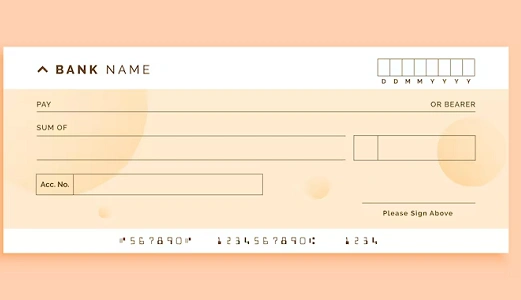
What Is a Bank Cheque?
A bank cheque is a written instruction issued by an account holder to their bank, directing it to pay a specified amount to a named person or entity.
In simple terms:
- The drawer writes the cheque
- The bank (drawee) is instructed to pay
- The payee receives the money
Cheques in India are governed by banking laws and operational rules framed under the supervision of the Reserve Bank of India.
How a Bank Cheque Works?
- The account holder issues a cheque to the payee
- The payee deposits the cheque in their bank
- The cheque is sent for clearing
- The issuing bank verifies funds and signature
- If valid, the amount is debited and credited
If verification fails, the cheque is returned unpaid.
Advantages of Bank Cheques
1. High Level of Control for the Payer
Cheques give the issuer full control over payment:
- You decide the payee
- You decide the amount
- You decide the date
Post-dated cheques allow scheduling payments in advance, which is useful for rent, EMIs, or business commitments.
2. Strong Legal Validity
Cheques have legal recognition.
- Dishonoured cheques can lead to legal action
- They are accepted as proof of payment obligation
- Widely used in contracts and agreements
This legal backing makes cheques reliable in formal transactions.
3. Suitable for Large-Value Payments
Cheques are commonly used for high-value payments where:
- Cash is unsafe
- Digital modes are not preferred
- Documentation is required
There is no daily transaction cap like UPI.
4. Clear Paper Trail and Record Keeping
Every cheque creates a documented transaction:
- Cheque number
- Date
- Amount
- Payee details
This is useful for:
- Audits
- Accounting
- Tax records
- Legal disputes
5. No Need for Digital Access
Cheques do not require:
- Internet
- Smartphones
- Banking apps
They are accessible to elderly users, rural customers, and those uncomfortable with digital systems.
6. Can Be Used for Account-to-Account Transfers
Cheques enable direct bank-to-bank transfers without sharing:
- Account numbers
- IFSC codes
- Digital credentials
This reduces the risk of online data misuse.
7. Stop Payment Facility
If a cheque is lost or wrongly issued, the drawer can issue a stop payment instruction, preventing misuse.
This control is not always available in instant digital payments.
Disadvantages of Bank Cheques
Despite their usefulness, cheques have significant drawbacks.
1. Risk of Cheque Bounce
One of the biggest issues with cheques is dishonour due to:
- Insufficient balance
- Signature mismatch
- Overwriting or errors
- Stale or post-dated cheques
Cheque bounce can cause:
- Payment delays
- Penalties
- Legal complications
2. Slow Clearing Process
Cheque clearing is not instant.
It may take:
- 1–2 working days (local clearing)
- Longer for outstation cheques
In urgent situations, this delay is a major disadvantage.
3. Fraud and Forgery Risk
Cheque-related frauds include:
- Forged signatures
- Altered amounts
- Fake cheques
- Stolen cheque books
Although banks have safety checks, the risk still exists.
4. Manual Errors Can Invalidate Cheques
Small mistakes can make a cheque invalid:
- Wrong date
- Spelling errors
- Overwriting
- Signature mismatch
These errors lead to rejection and inconvenience.
5. Physical Handling and Loss Risk
Cheques are physical instruments.
They can be:
- Lost
- Damaged
- Delayed in transit
Replacing a lost cheque takes time and effort.
6. Not Suitable for Everyday Small Payments
For daily expenses like:
- Grocery shopping
- Transport
- Food bills
Cheques are impractical due to time and effort involved.
7. Declining Acceptance
Many merchants and service providers now:
- Prefer UPI or cards
- Refuse cheques for small payments
- Accept cheques only from known customers
This reduces their usability in modern commerce.
Bank Cheque vs Demand Draft (Quick Comparison)
| Feature | Bank Cheque | Demand Draft |
| Payment guarantee | No | Yes |
| Risk of bounce | High | Very low |
| Funds blocked in advance | No | Yes |
| Issuance cost | Low | Higher |
| Convenience | Medium | Low |
Bank Cheque vs Digital Payments
| Aspect | Bank Cheque | Digital Payment |
| Speed | Slow | Instant |
| Fraud type | Physical forgery | Cyber scams |
| Internet required | No | Yes |
| Reversal | Possible before clearing | Limited |
| Acceptance | Declining | Very high |
When Are Cheques Still Useful?
Cheques remain relevant for:
- Business-to-business payments
- Rent and lease agreements
- Legal settlements
- Trust and institutional transactions
- Elderly or non-digital users
They are less suitable for speed-driven transactions.
Why Cheques Still Exist in Modern Banking
Cheques survive because:
- They offer legal enforceability
- They provide payment control
- Many institutions still rely on them
- Not everyone is digitally equipped
They act as a bridge between traditional and digital banking.
Final Thoughts
Bank cheques are no longer everyday payment tools, but they are far from obsolete. They provide control, documentation, and legal backing—features that digital payments do not always replace fully.
At the same time, cheques are:
- Slower
- Risk-prone
- Less convenient
In today’s banking environment, cheques should be used selectively, not habitually.