Unit banking is one of the oldest and simplest forms of banking organisation. Unlike modern banking systems with large branch networks and nationwide operations, unit banking is based on small, independent banks operating from a single location. Each bank functions as a separate unit, serving the local community without branches elsewhere.
This system developed at a time when banking was closely tied to local trade, agriculture, and small businesses. Even today, the concept of unit banking is studied in banking theory because it highlights the trade-off between local focus and operational limitations.
To understand why unit banking works well in some situations and fails in others, it is important to examine its structure, strengths, and weaknesses.
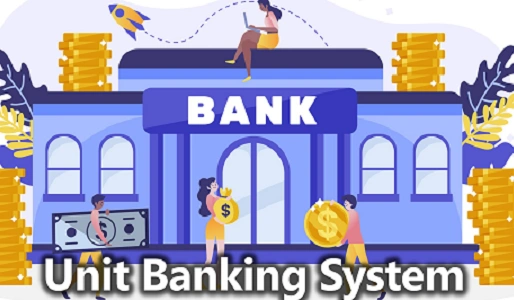
What Is Unit Banking?
Unit banking refers to a banking system in which a bank:
- Operates from a single office or location
- Does not have branches at other places
- Is independently owned and managed
- Serves a limited geographical area
Each unit bank is a self-contained institution. It collects deposits locally and lends mainly within the same area.
In India, banking systems and structures operate under regulatory oversight of the Reserve Bank of India, although pure unit banking is not common in India today due to regulatory and developmental needs.
Key Features of Unit Banking
- Single-office operation
- Local ownership and management
- Limited area of operation
- Close relationship with customers
- Independent decision-making
- Small scale of operations
These features shape both the advantages and disadvantages of unit banking.
Advantages of Unit Banking
1. Strong Local Knowledge
One of the biggest strengths of unit banking is deep understanding of the local area.
Unit banks:
- Know local customers personally
- Understand local businesses and agriculture
- Are familiar with regional economic conditions
This helps in better credit assessment and more informed lending decisions.
2. Personalised Customer Service
Because of limited scale:
- Customers receive individual attention
- Relationships are personal rather than transactional
- Decision-making is quicker at the local level
Customers often deal directly with bank officials who know them well.
3. Quick Decision-Making
Unit banks do not depend on head offices or regional branches.
- Loan approvals are faster
- Policies are implemented quickly
- Local managers have decision-making authority
This flexibility is especially useful for small businesses.
4. Simple Organisation Structure
Unit banking has:
- Fewer management layers
- Less bureaucracy
- Clear accountability
This simplicity reduces administrative complexity and operational confusion.
5. Better Control and Supervision
Since operations are limited to one location:
- Management can closely monitor activities
- Risk of internal fraud is easier to control
- Errors are detected faster
Effective supervision improves internal discipline.
6. Supports Local Economic Development
Unit banks reinvest local savings into local projects.
This helps:
- Small traders
- Farmers
- Local entrepreneurs
Money collected from the area benefits the same community.
7. Lower Operating Costs
With no branch network:
- Infrastructure costs are low
- Administrative expenses are limited
- Staff size is smaller
This can improve efficiency in small-scale operations.
Disadvantages of Unit Banking
Despite its benefits, unit banking has serious limitations.
1. Lack of Diversification
Unit banks operate in a limited area.
- Economic downturn in the region directly affects the bank
- Natural disasters or crop failures can cause heavy losses
- Risk is concentrated, not spread
This makes unit banks more vulnerable to local shocks.
2. Limited Resources
Unit banks have:
- Small capital base
- Limited deposits
- Restricted lending capacity
They cannot finance large projects or support major industries.
3. Higher Risk of Failure
Because of limited size and concentration:
- Losses have a greater impact
- There is less financial cushion
- Recovery options are limited
A single bad phase can threaten the bank’s survival.
4. No Economies of Scale
Large banks benefit from scale.
Unit banks:
- Cannot spread costs over multiple branches
- Face higher per-unit operating costs
- Lack bargaining power
This affects competitiveness.
5. Limited Customer Convenience
Customers of unit banks face restrictions:
- No branch access in other locations
- Difficulty handling outstation transactions
- Limited ATM and digital infrastructure
Modern customers expect wider access, which unit banks struggle to provide.
6. Technological Limitations
Advanced banking technology requires investment.
Unit banks often:
- Cannot afford modern core banking systems
- Lag in digital services
- Offer fewer online facilities
This makes them less attractive in a digital economy.
7. Weak Ability to Handle Large Withdrawals
If many customers withdraw funds at once:
- Liquidity pressure increases
- The bank may struggle to manage cash flow
Large banks can shift funds across branches, but unit banks cannot.
Unit Banking vs Branch Banking
| Aspect | Unit Banking | Branch Banking |
| Area of operation | Limited | Wide |
| Decision-making | Local | Centralised |
| Risk | Concentrated | Diversified |
| Customer service | Personal | Standardised |
| Resources | Limited | Large |
Suitability of Unit Banking
Unit banking works best when:
- Economic activity is stable
- Banking needs are small-scale
- Customers value personal relationships
- Area is geographically isolated
It is less suitable for:
- Industrial economies
- Large-scale financing
- Highly mobile populations
Relevance of Unit Banking Today
In today’s banking environment:
- Digital banking requires scale
- Risk management needs diversification
- Customers expect nationwide access
As a result, pure unit banking has declined. However, its principles still influence:
- Community banking
- Cooperative banks
- Local financial institutions
The focus on local knowledge and relationship banking remains relevant.
Why Unit Banking Declined in Many Countries
Unit banking declined due to:
- Economic expansion
- Need for large capital mobilisation
- Technological advancement
- Customer demand for wider services
Branch and network banking proved better suited for modern economies.
Lessons from Unit Banking
Even though unit banking has limitations, it offers important lessons:
- Local knowledge matters
- Personal relationships build trust
- Decentralised decision-making can be effective
Modern banks try to combine these strengths with scale and technology.
Final Thoughts
Unit banking represents a localised and relationship-driven approach to banking. Its main strengths lie in personalised service, local understanding, and quick decision-making. For small, stable communities, this system can work efficiently.
However, unit banking struggles with risk concentration, limited resources, and technological challenges. In a connected and fast-moving economy, these weaknesses become critical.
Unit banking is best viewed as:
- A foundation of traditional banking
- A system suited to small-scale economies
- A concept that shaped modern banking evolution
It reminds us that banking is not just about size and technology—it is also about trust, understanding, and community connection.