Private banks have become a major force in India’s banking landscape. Over the last two decades, they have changed how people experience banking—faster service, better technology, cleaner branches, and more customer-focused products. For many urban customers, private banks are now the default choice for salary accounts, loans, cards, and digital payments.
At the same time, private banks operate with a strong profit motive. This affects pricing, accessibility, and service priorities. While they excel in efficiency and innovation, they are often criticised for higher charges and selective customer focus.
To understand private banks clearly, it is important to look at both sides—what they do well and where they fall short.
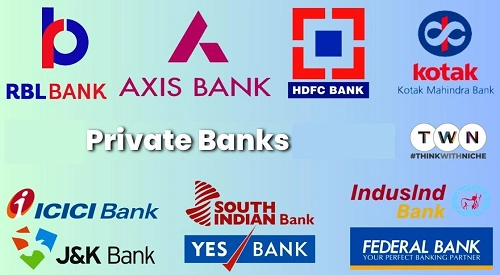
What Is a Private Bank?
A private bank is a bank owned and managed by private shareholders, not by the government. These banks operate for profit and compete aggressively for customers through better services, technology, and product offerings.
In India, private banks function under the same regulatory framework as public sector banks and are governed by guidelines issued by the Reserve Bank of India.
Examples include new-generation private banks and older private sector banks, serving individuals, businesses, and corporates.
How Private Banks Operate?
Private banks focus on:
- Customer acquisition and retention
- Technology-driven service delivery
- Cross-selling of loans, cards, and investments
- Fee-based income along with interest income
Their operations are efficiency-oriented, with strong performance targets and digital-first strategies.
Advantages of Private Banks
1. Superior Customer Service
One of the biggest strengths of private banks is service quality.
Customers usually experience:
- Faster response times
- Better branch ambience
- More professional staff
- Shorter waiting periods
Service standards are closely monitored, and customer satisfaction is a key performance metric.
2. Advanced Technology and Digital Banking
Private banks are leaders in banking technology.
They offer:
- Feature-rich mobile banking apps
- Smooth internet banking platforms
- Instant account opening and KYC
- Quick digital loan approvals
Technology is used not just for convenience but also for speed and personalization.
3. Faster Loan Processing
Private banks are known for quick credit decisions.
Loan approvals for:
- Personal loans
- Home loans
- Vehicle loans
- Credit cards
are often faster due to automated systems and streamlined processes.
4. Wide Range of Products and Customisation
Private banks offer diverse products:
- Multiple savings and salary account variants
- Premium and lifestyle credit cards
- Wealth management and investment services
- Tailored loan products
Customers can choose products based on income level and lifestyle.
5. Innovation and New-Age Banking Features
Private banks are usually the first to introduce:
- Contactless cards
- AI-based customer support
- App-based service requests
- Integrated investment dashboards
This keeps them aligned with changing customer expectations.
6. Efficient Relationship Management
High-value customers often get:
- Dedicated relationship managers
- Priority banking services
- Personalized financial solutions
This enhances the overall banking experience for premium clients.
7. Better Transparency in Processes
Private banks usually provide:
- Clear communication
- Digital tracking of service requests
- SMS and email alerts for transactions
This improves clarity and reduces uncertainty for customers.
Disadvantages of Private Banks
Despite their strengths, private banks have several limitations.
1. Higher Charges and Fees
Private banks are often more expensive.
Charges may apply for:
- Non-maintenance of minimum balance
- ATM usage beyond limits
- Debit and credit card fees
- Service requests
These costs can be burdensome for low-income customers.
2. Strict Minimum Balance Requirements
Many private banks require:
- Higher minimum balances
- Average monthly balance maintenance
Failure to maintain balances leads to penalties, unlike many public sector or basic accounts.
3. Selective Customer Focus
Private banks prioritise:
- Salaried professionals
- High-income individuals
- Urban customers
Rural customers, small farmers, and low-income groups may receive limited attention.
4. Aggressive Sales and Cross-Selling
Customers often face:
- Frequent calls for loans and cards
- Pressure to buy investment or insurance products
- Over-selling of financial products
This can lead to unsuitable financial decisions if customers are not careful.
5. Profit-Driven Approach
Being profit-oriented, private banks may:
- Reduce services that are not profitable
- Focus on fee-based income
- Limit flexibility in special cases
This can make them less forgiving during financial stress.
6. Limited Rural Presence Compared to Public Banks
Although expanding, private banks still have:
- Fewer rural branches
- Lower penetration in remote areas
Public sector banks continue to dominate rural banking.
7. Risk Perception During Financial Stress
During periods of financial instability:
- Customers may feel less secure
- Trust may be tested
Even though private banks are regulated, perception plays a role in customer confidence.
Private Banks vs Public Sector Banks (Quick Comparison)
| Aspect | Private Banks | Public Sector Banks |
| Ownership | Private shareholders | Government |
| Service speed | Fast | Moderate |
| Technology | Advanced | Improving |
| Charges | Higher | Lower |
| Rural reach | Limited | Strong |
Who Should Choose Private Banks?
Private banks are suitable for:
- Salaried professionals
- Urban customers
- People valuing speed and convenience
- Tech-savvy users
- Customers needing quick loans and premium services
They may not be ideal for:
- Low-income groups
- Rural customers
- People seeking minimal charges
- Those uncomfortable with aggressive sales
Role of Private Banks in the Indian Economy
Private banks contribute by:
- Driving innovation in banking
- Improving service benchmarks
- Supporting credit growth
- Enhancing competition in the banking sector
They push the entire system to modernise and become customer-centric.
Challenges Faced by Private Banks
Private banks face challenges such as:
- Managing rapid growth
- Maintaining asset quality
- Controlling aggressive lending
- Ensuring data security
- Balancing profitability with customer trust
Strong governance and risk management are critical.
Final Thoughts
Private banks have transformed banking in India by focusing on efficiency, technology, and customer experience. They offer speed, convenience, and a wide range of modern banking products that suit today’s lifestyle.
However, these benefits come at a cost. Higher charges, strict balance rules, and a profit-driven approach can make private banks less inclusive.
Private banks work best for customers who:
- Maintain regular balances
- Understand banking charges
- Use digital services actively
They are powerful tools when used with awareness.
Private banks bring speed and innovation.
Public banks bring reach and stability.
Understanding this difference helps customers choose the right bank for their needs.