No, harassment by a bank recovery agent is not legally permitted in India. Banks and their recovery agents have the right to contact borrowers and pursue legitimate outstanding dues, but they must follow applicable RBI regulations and fair-practice requirements. Intimidation, threats, public humiliation, invasion of privacy, threatening calls, inappropriate messages and persistent calls at prohibited hours are specifically restricted by RBI directions.
A borrower does not lose the right to respectful and lawful treatment simply because a loan payment is overdue.
What Is a Bank Recovery Agent?
A recovery agent is a person or agency engaged by a bank or other regulated lender to assist in collecting overdue loan amounts. Banks may outsource collection activities, but outsourcing does not remove the bank’s responsibility for the conduct of its agents.
RBI has made it clear that the ultimate responsibility for outsourced activities remains with the regulated entity, including responsibility for the actions of recovery agents. Banks must ensure that agents follow applicable instructions and are appropriately trained.
Therefore, a bank generally cannot avoid responsibility simply by saying that inappropriate conduct was committed by an outside recovery agency.
What Conduct Is Considered Harassment?
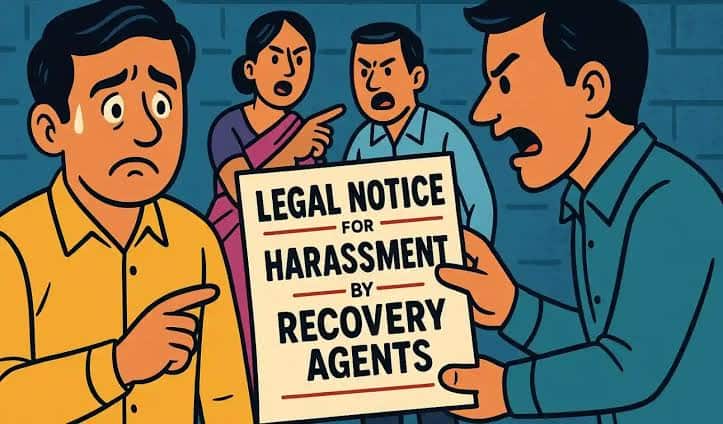
RBI’s framework specifically prohibits intimidation or harassment, whether verbal or physical, during debt collection.
Examples include:
- Threatening or anonymous calls
- Abusive or intimidating language
- Publicly humiliating the borrower
- Intruding into the privacy of family members, friends or referees
- Sending inappropriate messages through mobile phones or social media
- Making repeated or persistent calls
- Making calls before 8:00 a.m. or after 7:00 p.m. for recovery of overdue loans
- Making false or misleading representations
- Using physical force or muscle power
RBI’s 2022 instructions specifically identify these practices as prohibited in recovery efforts.
This means that a borrower can be contacted for legitimate recovery purposes, but the method of contact must remain within regulatory boundaries.
Can a Recovery Agent Call a Borrower About an Unpaid Loan?
Yes. A recovery agent can contact a borrower regarding an overdue loan.
The prohibition is not against loan recovery itself. Banks have legitimate rights to demand repayment and use lawful recovery mechanisms.
The restriction concerns the manner in which recovery is carried out. RBI requires recovery agents to act with care and sensitivity, including with respect to calling hours, customer privacy and accurate communication of the borrower’s obligations.
Therefore, receiving a genuine recovery call does not automatically mean that harassment has occurred. Repeated, threatening or abusive conduct may, however, cross the regulatory boundary.
Can Recovery Agents Contact Family Members?
A recovery agent should not use a borrower’s family members, friends or referees as a means of publicly humiliating or intimidating the borrower.
RBI specifically prohibits conduct intended to intrude upon the privacy of debtors’ family members, referees and friends.
This does not mean that every communication involving another person is automatically unlawful. Particular circumstances may require separate consideration, especially where a person is a guarantor or co-borrower with independent contractual obligations.
The important distinction is between legitimate communication and using third parties to shame, threaten or pressure the borrower.
Can Recovery Agents Visit the Borrower’s Home?
A recovery agent may undertake lawful recovery activity, including appropriate contact with a borrower, subject to applicable rules and the lender’s recovery procedures.
However, a visit does not give the agent permission to threaten, abuse, intimidate or use physical force. RBI’s fair-practice framework specifically states that lenders should not resort to undue harassment or the use of muscle power for recovery.
If an agent arrives at a borrower’s residence, the borrower can request identification and information about the agency and the lender it represents. If the interaction becomes threatening or violent, the borrower should prioritise personal safety and contact the appropriate authorities.
Is Calling Before 8 a.m. or After 7 p.m. Allowed?
For recovery of overdue loans, RBI’s 2022 instructions specifically prohibit regulated entities and their agents from calling borrowers before 8:00 a.m. or after 7:00 p.m.
This provides borrowers with a clear regulatory standard concerning recovery calls.
Repeated calls during permitted hours can also become problematic if they amount to persistent harassment or intimidation. The rule is therefore not simply about the clock; the overall conduct of the recovery process matters.
What Should a Borrower Do If a Recovery Agent Harasses Them?
A borrower should preserve evidence rather than simply ignoring the conduct.
Useful evidence may include:
- Call logs and phone numbers
- SMS or WhatsApp messages
- Emails
- Audio or other lawful records of threatening communications
- Names and identification details provided by the agent
- Details of visits to the home or workplace
- Copies of bank notices and loan documents
The borrower should first make a written complaint to the bank’s grievance-redressal mechanism and clearly describe the conduct. The complaint should request an investigation and confirmation of the recovery agency’s identity and authority.
RBI’s framework also requires banks to maintain appropriate grievance mechanisms, while banks remain responsible for their recovery agents’ conduct.
Can a Borrower Complain to RBI?
Yes, where appropriate.
A borrower should generally first approach the concerned bank and allow it an opportunity to resolve the complaint. If the complaint is not satisfactorily resolved, the borrower may use the applicable RBI complaint-redressal mechanism, subject to the relevant eligibility and procedural requirements.
If the conduct involves threats of violence, physical assault, stalking, extortion or other potentially criminal behaviour, the matter may also warrant contacting the police or another competent authority.
Does Harassment Cancel the Loan?
Not automatically.
Even if a recovery agent behaves improperly, that does not ordinarily erase the underlying loan liability. The borrower may have a separate complaint or legal claim concerning unlawful recovery practices while the legitimate outstanding debt continues to exist.
Similarly, a bank’s right to recover a genuine debt does not give its agents permission to use prohibited methods.
Conclusion
Bank recovery agent harassment is not legally permitted in India. Banks and their agents can pursue overdue loans, but RBI rules require them to use fair and lawful recovery practices. Threats, intimidation, public humiliation, privacy violations, inappropriate messages, persistent harassment and recovery calls before 8:00 a.m. or after 7:00 p.m. are specifically restricted.
Banks also remain responsible for the conduct of recovery agents they engage.
Borrowers facing improper recovery practices should preserve evidence, complain to the bank in writing and use the appropriate regulatory or legal remedy where necessary. At the same time, borrowers should remember that challenging harassment is separate from disputing a legitimate outstanding loan amount.